Landmark
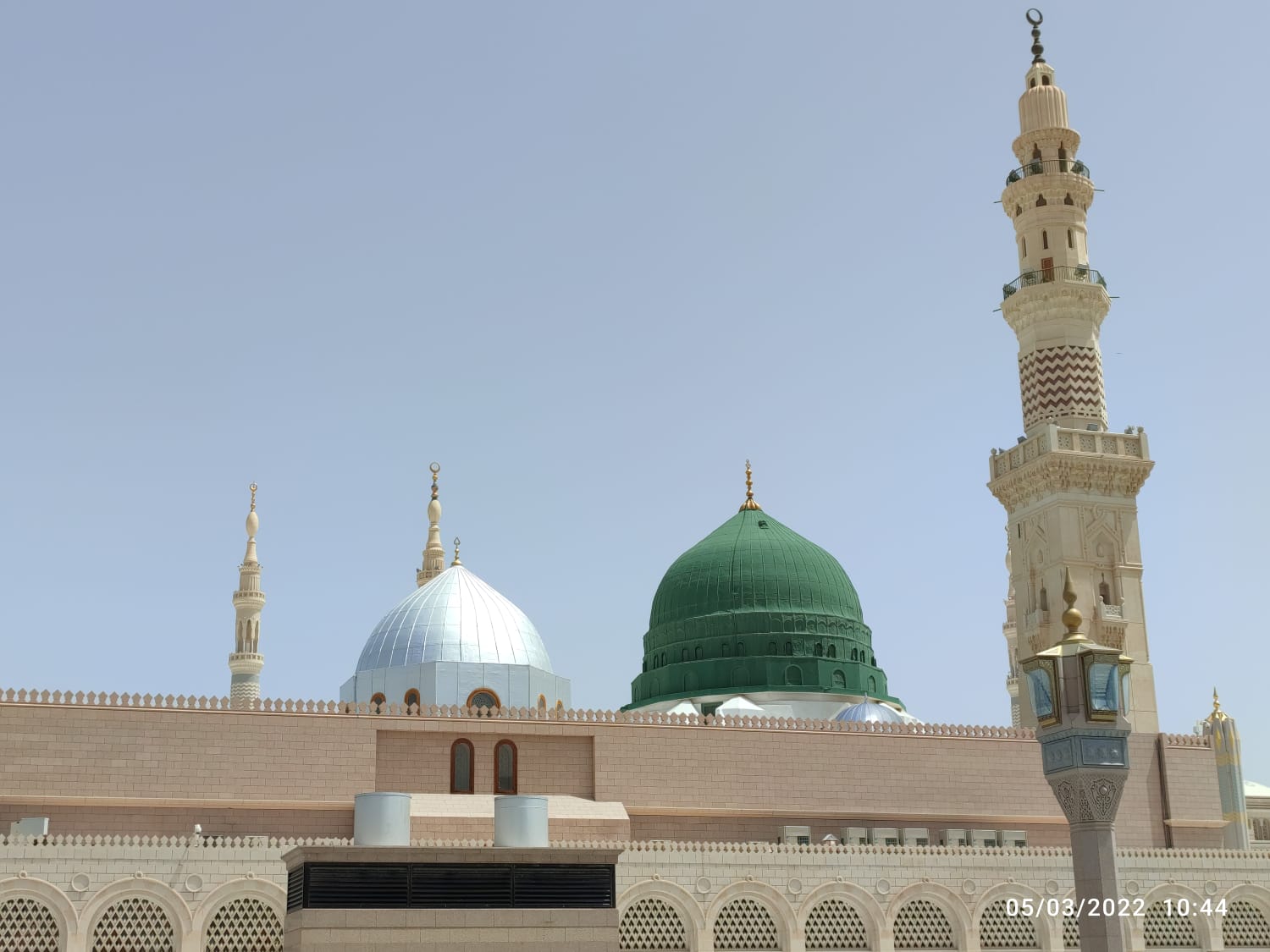
The Green Dome and the Prophet's Grave
The green dome above the chamber where the Prophet ﷺ, Abu Bakr and Umar are buried. Visitors greet respectfully from a distance.
History
The Prophet ﷺ died in Madinah in 11 AH (632 CE) and was buried in the chamber of Aisha. Abu Bakr (died 13 AH) and Umar (died 23 AH) were later buried beside him, as recorded in classical sources.
The structure above the grave changed over the centuries. The present green dome and enclosure were shaped by later Ottoman and modern works. Its purpose is to protect and mark the tomb.
Visiting tips
Access to the area around the grave is organised with separate times and gates, similar to the Rawdah; check official information for current arrangements. The area is usually crowded and waiting in line may be necessary. The visit is short and controlled by staff.
Times and sections for women can differ. Follow the instructions of the staff. Standing and waiting can be tiring.
Etiquette
Greet the Prophet ﷺ from a respectful distance, for example with the traditional salutation "Peace be upon you, O Messenger of Allah", followed by greetings to Abu Bakr and Umar. Keep the voice respectful and not disruptive to others.
Kissing the grave, bowing, touching it or circling it is not part of the recommended conduct. Many scholars state that seeking blessing by touching graves has no basis in the sources. Pray facing the qibla; supplication is addressed to Allah alone.
Timeline
11 AH / 632 CE
Death and burial of the Prophet
The Prophet ﷺ died in Madinah and was buried in the chamber of Aisha.
13 AH / 634 CE
Burial of Abu Bakr
Abu Bakr was buried beside the Prophet.
23 AH / 644 CE
Burial of Umar
Umar was buried beside the Prophet and Abu Bakr.
Location
Sources
- Sahih al-Bukhari 1389
- Ibn Sa'd, al-Tabaqat al-Kubra
- al-Samhudi, Wafa al-Wafa bi-Akhbar Dar al-Mustafa