Ritual site
Jamarat (the stoning pillars)
The ritual of throwing pebbles at three pillars in Mina; an important part of Hajj that can also be visited outside the pilgrimage season.
History
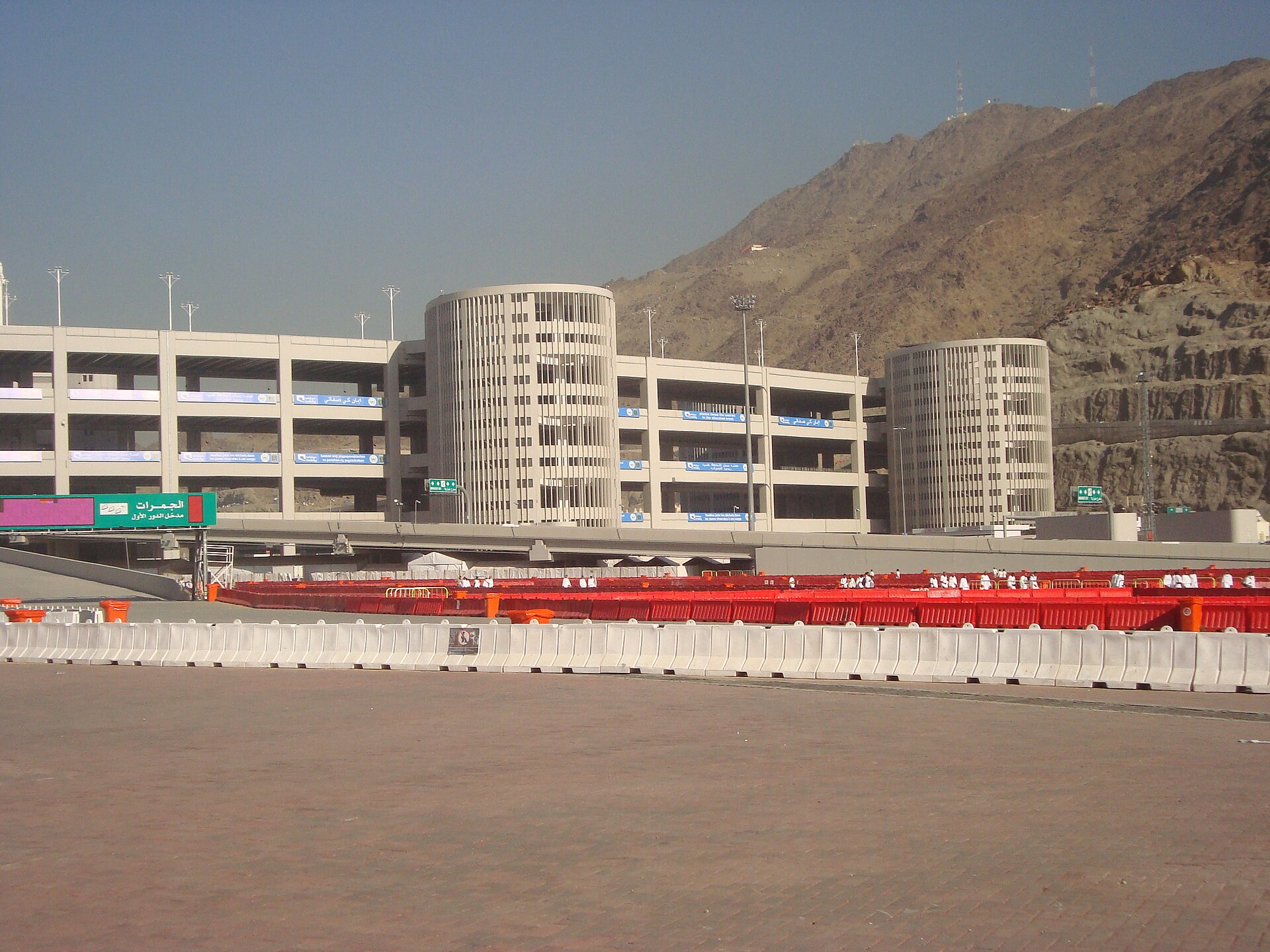
The Jamarat are three pillars in Mina: the small (al-Ula), the middle (al-Wusta) and the large (al-Aqaba). On 10 Dhu l-Hijjah pilgrims throw seven pebbles only at the large pillar; on the 11th to 13th they throw at all three. The Prophet ﷺ performed this rite on the Farewell Hajj (Sahih Muslim 1218).
Tradition links the rite with the story of Ibrahim driving away Satan with stones; the Quran does not mention this detail. The bridge has been developed over time into a multi-level structure to reduce crowding.
Visiting tips
The Jamarat bridge has several levels and can be visited outside Hajj; security checks may apply. During Hajj the timing and rules are strict, so check official channels for current information.
Walking distances can be long; visit early morning or at night in the heat, and bring water and a hat.
Etiquette
Do not rush at the Jamarat; respect the queues and security instructions. Throw the pebbles calmly and carefully to protect yourself and others. Throwing shoes or other objects is not appropriate.
Perform the rite with dignity and do not push. Prepare pebbles in advance and wait calmly for your turn.
Location
Sources
- Sahih Muslim 1218
- Ibn Kathir, Tafsir (commentary on the days of Tashriq)
- Saudi Ministry of Hajj and Umrah (official information on the Hajj sites)