Cemetery
Jannat al-Baqi (the cemetery of al-Baqi)
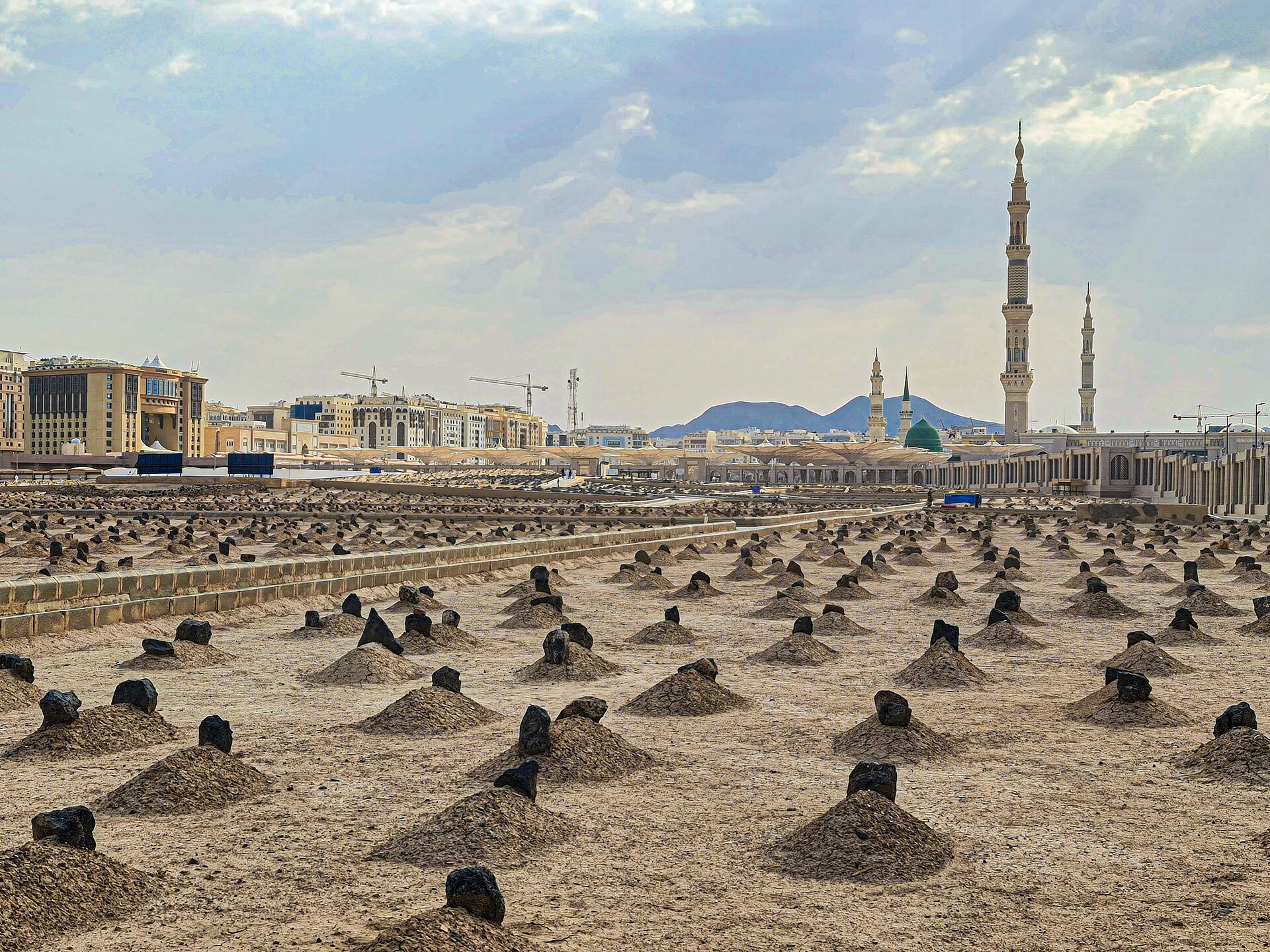
The oldest and best-known cemetery of Madinah, where many Companions, members of the Prophet's family and early Muslims are buried. Visiting graves is recommended as a reminder of the Hereafter.
History
Al-Baqi has been the burial ground of the people of Madinah since the time of the Prophet ﷺ. According to traditions, many Companions are buried there, including Uthman ibn Affan and Ibrahim, the son of the Prophet ﷺ. Hadiths describe the Prophet visiting the cemetery and greeting its people.
Over time the cemetery was enlarged and some graves received structures. In the 1920s (around 1344 AH) many tombs and superstructures were removed in a reorganisation; the reasons and the interpretation of this are discussed in historical and scholarly literature. Today it is a simple, open cemetery.
Visiting tips
The cemetery is generally open for visits in the morning and afternoon; check current opening hours locally. Graves are not individually marked in a prominent way, so ask at an information point if you wish to find a particular grave.
Walking in sun and heat is needed; prefer the early hours in hot months. Arrangements for women may differ, so please check locally.
Etiquette
Be quiet and respectful in the cemetery; do not step on graves, sit on them or laugh loudly. The purpose of the visit is to pray for the deceased and to remember the Hereafter. A traditional greeting is "Peace be upon you, people of this abode."
Placing objects, touching graves for blessing or asking the dead for help is considered without basis by many scholars. Supplication is addressed to Allah.
Timeline
1 AH / 622 CE (approx.)
The cemetery comes into use
According to traditions, the site was already used for burials in the time of the Prophet ﷺ.
Location
Sources
- al-Samhudi, Wafa al-Wafa bi-Akhbar Dar al-Mustafa
- Sahih Muslim 974
- Sahih Muslim 975
- Ibn Sa'd, al-Tabaqat al-Kubra