Ritual site
Kaaba
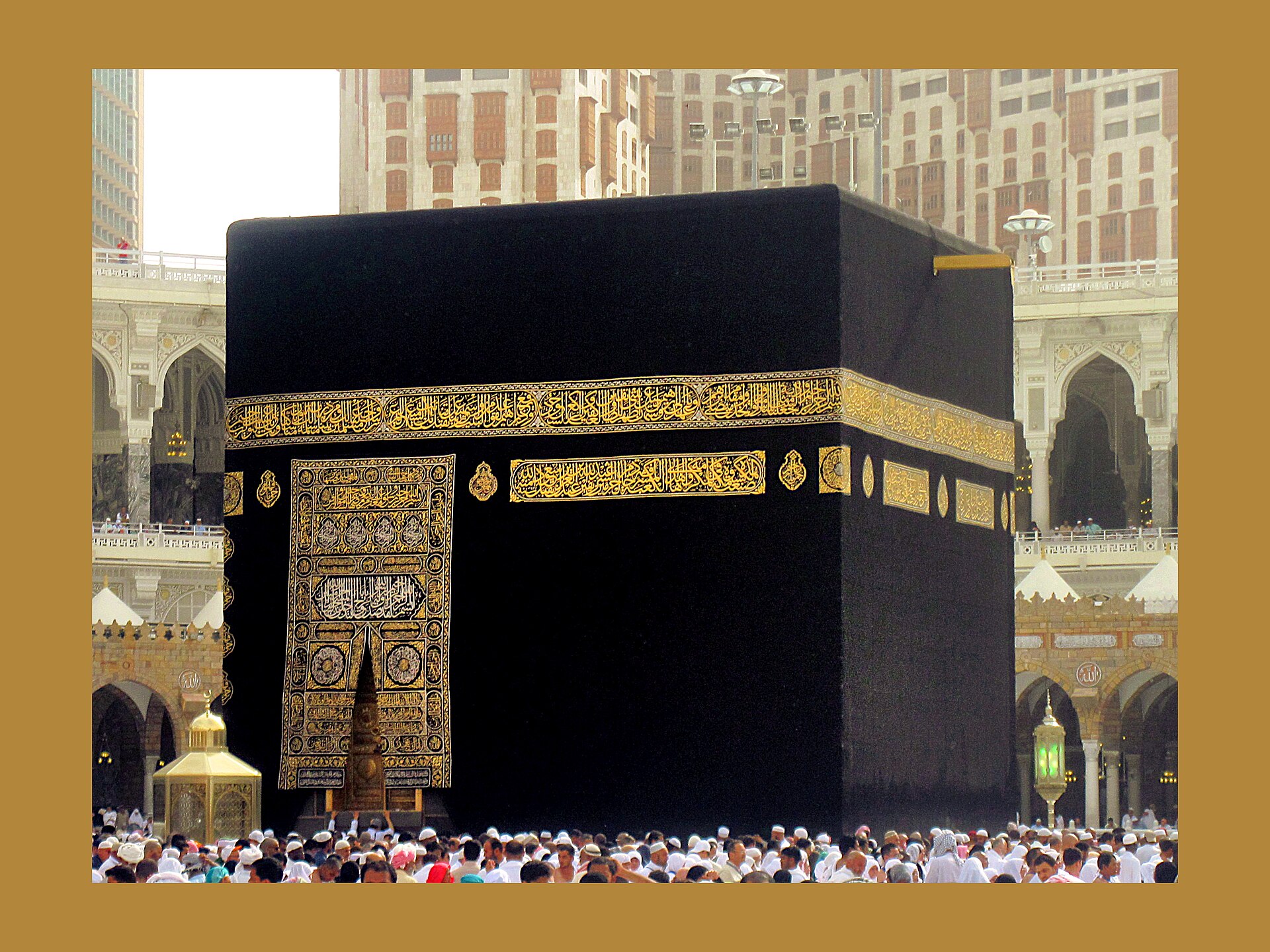
The cube-shaped structure at the centre of the Masjid al-Haram; the qibla for prayer and the centre of tawaf.
History
The Quran states that Ibrahim and Ismail built the Kaaba and were commanded to keep it pure for worshippers (22:26; 2:127). Details of the early construction rest on transmitted reports and cannot be dated with certainty.
Before the prophethood the Quraysh rebuilt the Kaaba. When the Black Stone had to be placed, the Prophet ﷺ settled the dispute by lifting the stone with the tribal leaders on a cloth (Ibn Hisham). The cloth covering (kiswa) is still renewed every year.
Visiting tips
Tawaf is performed around the Kaaba, which is about 13 metres high; the side lengths vary between sources, roughly 10 to 12 metres. The door faces east and is raised above ground level.
Entry into the interior is possible only at certain times and with official permission, so most visitors perform tawaf from the outside. Crowds are largest after the dawn prayer and in the evening. Follow the instructions of security staff.
Etiquette
Visitors who wish to touch or kiss the Kaaba should respect the queue and the instructions of security staff. Pushing, shouting and touching with shoes are inappropriate. Keep your face and heart on worship.
Some gestures, such as touching the kiswa, are often impossible in a crowd; it is more dignified to continue the tawaf calmly. Some people seek blessing from the stones or the covering; scholars point out that there is no adequate basis for this, and that tawaf itself is the act of worship.
Timeline
17 BH / 605 CE (approx.)
Quraysh rebuild the Kaaba and the Black Stone is placed
The Quraysh rebuilt the Kaaba and a dispute arose among the tribes about placing the Black Stone. The Prophet ﷺ found a solution in which every tribe took part. The year is not precisely recorded.
Location
Sources
- Quran 2:127; 22:26
- Ibn Hisham, al-Sira al-Nabawiyya
- al-Azraqi, Akhbar Makkah
- Saudi Ministry of Hajj and Umrah (official information on the Two Holy Mosques)