Historic site
Al-Balad, Historic Jeddah
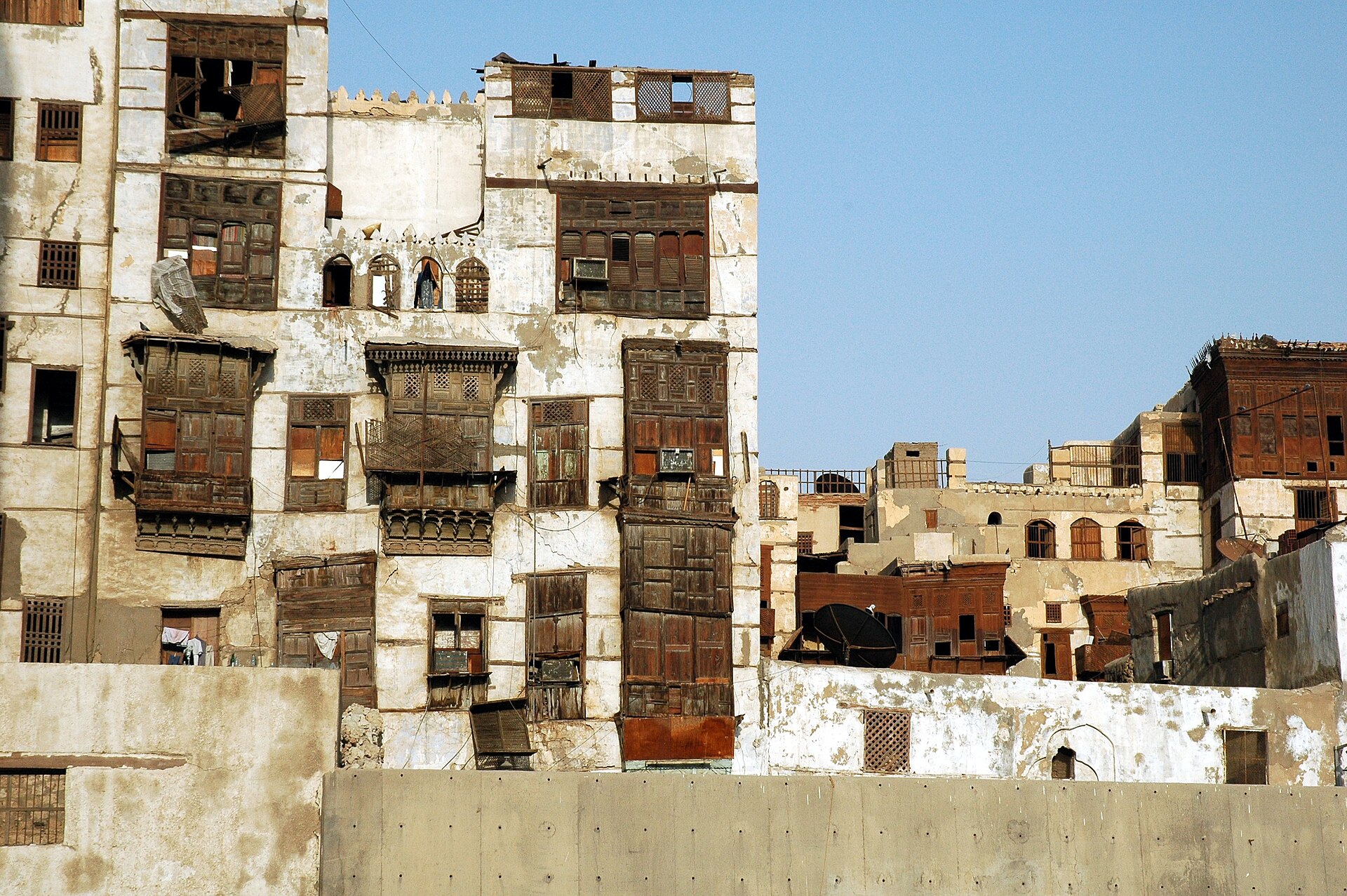
The old city of Jeddah, with houses of coral stone and carved wooden mashrabiya balconies, inscribed by UNESCO in 2014 as Historic Jeddah, the Gate to Makkah.
History
Jeddah's location on the Red Sea, close to Makkah, made it for centuries the main port through which pilgrims arrived by sea. The old town, with its tall houses built of coral stone and carved wooden mashrabiya, reflects this trade and pilgrimage.
The buildings were used in Ottoman times and later periods. The city's commercial and cultural importance continued for centuries, while modern urban growth made the protection of the historic core a concern. UNESCO inscribed the old town in 2014.
Visiting tips
The old town has narrow streets that are best explored on foot, and guided walks are common. The best times are morning or late afternoon; avoid the midday heat.
Walking and stairs can be tiring, so elderly visitors should choose short routes. Opening hours of museums and some buildings may change, so check current information. Modest dress and respect for local culture are appreciated.
Etiquette
Some old houses are private property; do not enter without permission and respect people's privacy when photographing. Be quiet around prayer times and in the mosques of the old town.
Timeline
1435 AH / 2014 CE
Inscription on the UNESCO World Heritage List
Old Jeddah was inscribed on the UNESCO World Heritage List in 2014.
Location
Sources
- UNESCO World Heritage Centre, Historic Jeddah, the Gate to Makkah (inscribed 2014)
- Saudi Heritage Commission (official information on Al-Balad)